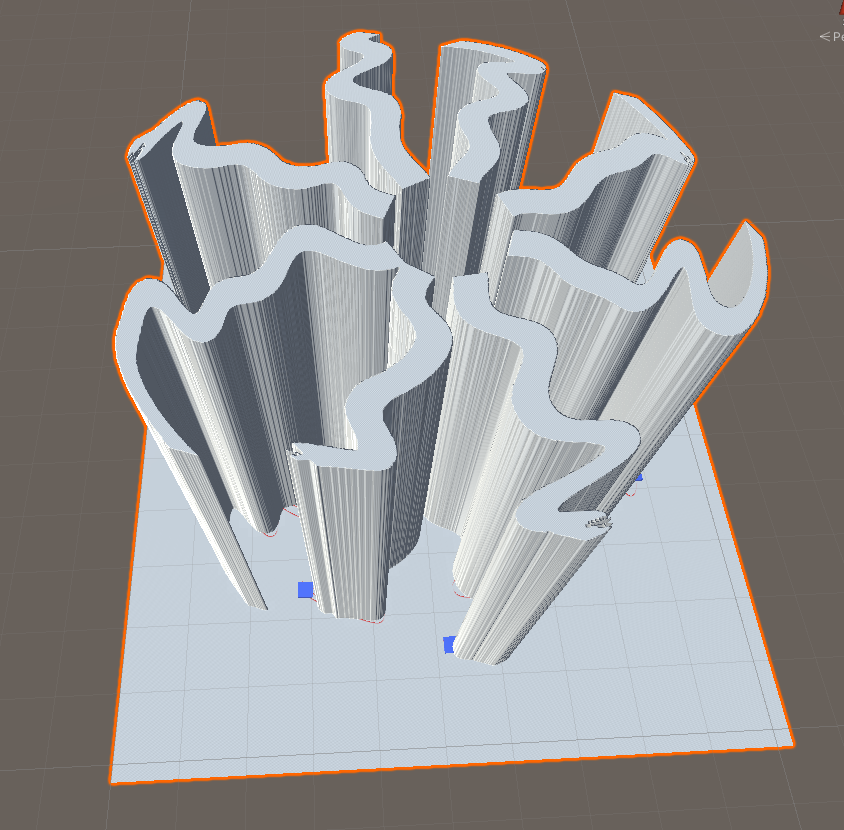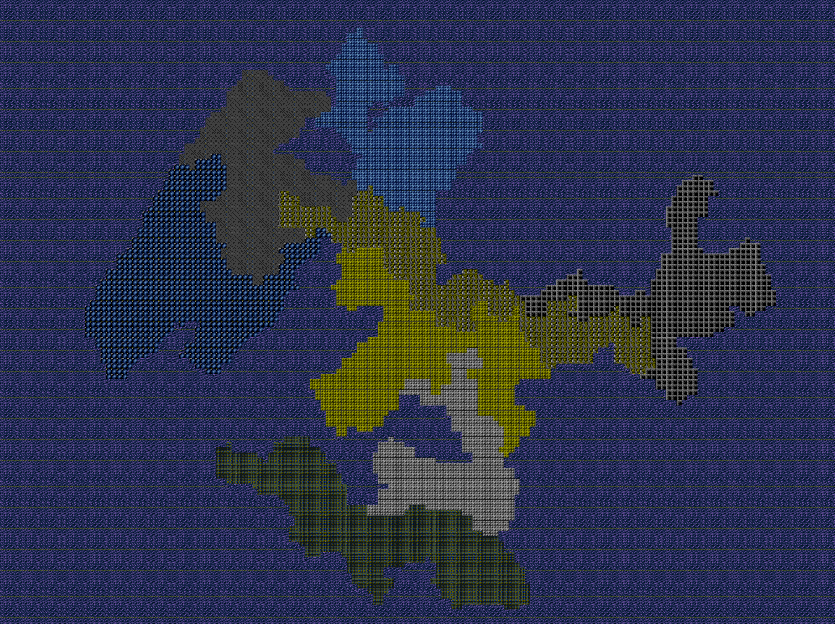
Map texture generated using my random algorithm.

Games, Music, and More...

Exploring novel designs and technology, with an eye and ear for human experience.

Waterfall

Realtime Audio Visualizer
Fall 2023
Lead developer and designer. Created in ChuGL audio-visual programming environment. Demo music composed using digital sound synthesis in Chuck.

Waterfall (as in "waterfall plot") is an audio visualizer imbuing a practical function with calming aesthetics.

The fast fourier transform of the current signal is displayed at the top of the screen, with signals with especially high energy precipitating animated water droplets.

The time-domain signal is represented as an ever-evolving stream which falls off a cliff and then fades to nothingness.

This Is A Repeat After Me Song

Competitive Rhythm Game
Fall 2023 to present
Lead developer and designer.

The game's first iteration was a musical barcode scanner, created using the ChuGL game engine/audio synthesis platform.


For the second iteration, I switched to Unity 3d for greater ease of doing 3d graphics and physics, and relatively easy integration with online multiplayer services offered by photon fusion. I changed the gameplay to revolve around lives and discrete jumps as I found this to be a clearer mechanic and win condition.


I'm currently working on yet another version of the game which simplifies the visuals and adds more depth to the player's input, as they now have several options of different moves they can do, each of which plays a different sound.
Tandem Defendo Tu

Online Multiplayer Tower Defense Game
Summer 2022 to present
Lead developer and co-designer.
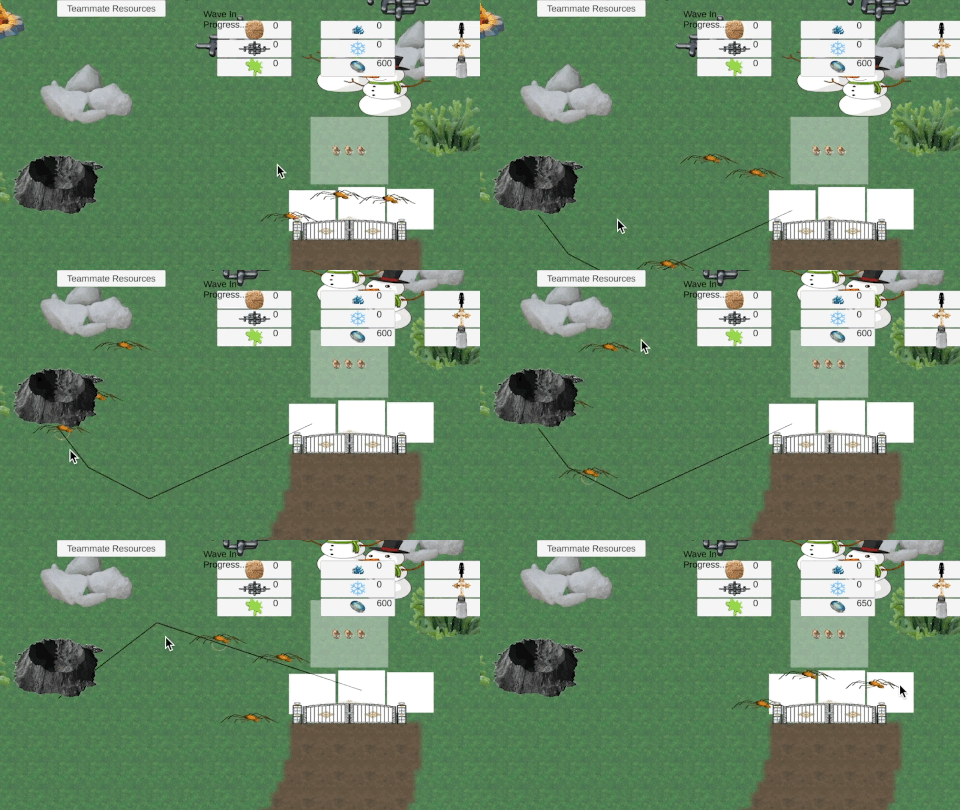
While creating TD2, I implemented many basic aspects of RTS/Moba/TD functionality in Unity Game engine—everything from box selection to health bars, building placement, resource trading, and damage formulas. Here are some of the more interesting and complex features I created:

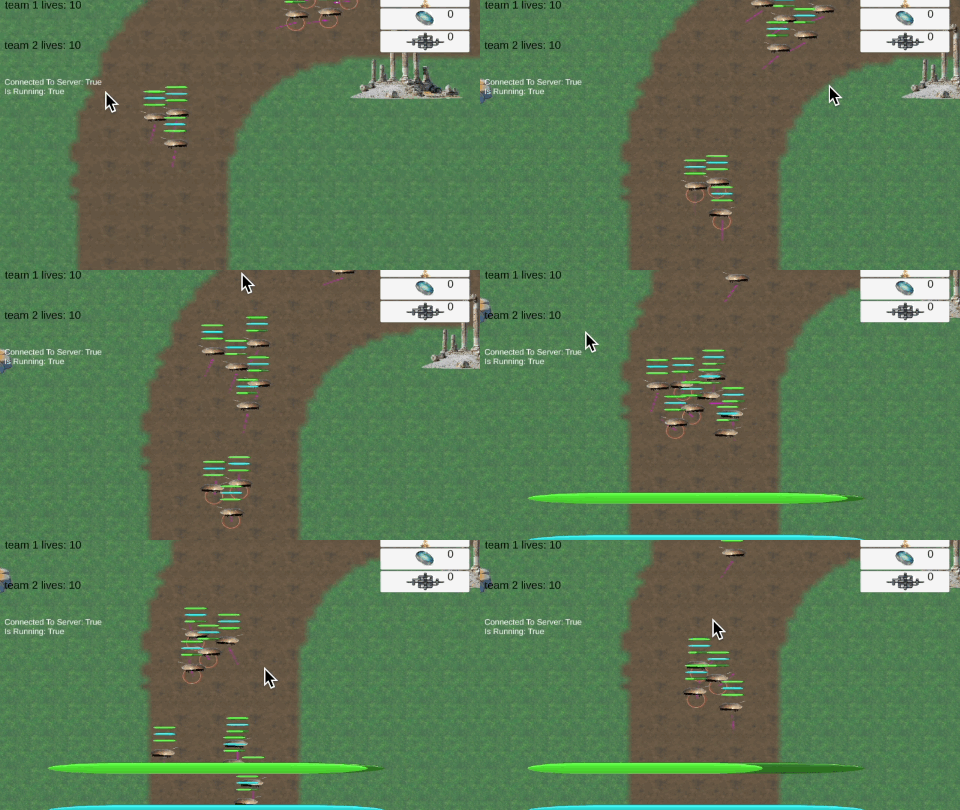
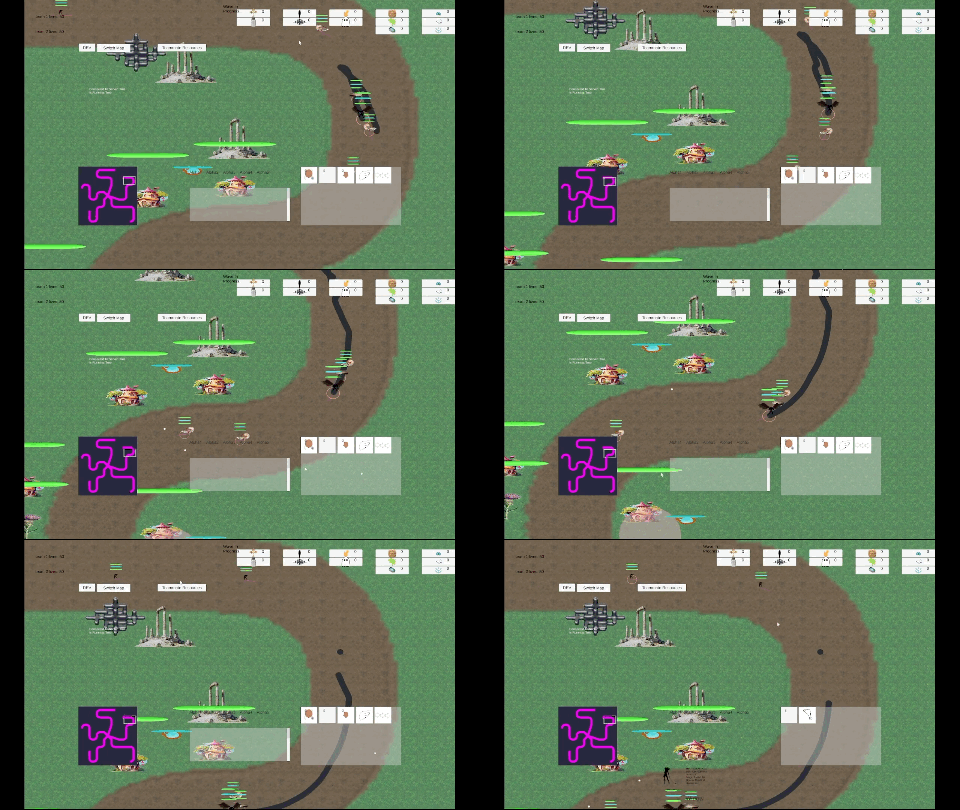
In this clip, several worker units (themed as daddy longlegs spiders) collect resources from mines on the map. The path which these workers automatically take is represented by a black line which can be adjusted. Workers can also be moved off their paths for a short time, and their AI will return them back to the default route.
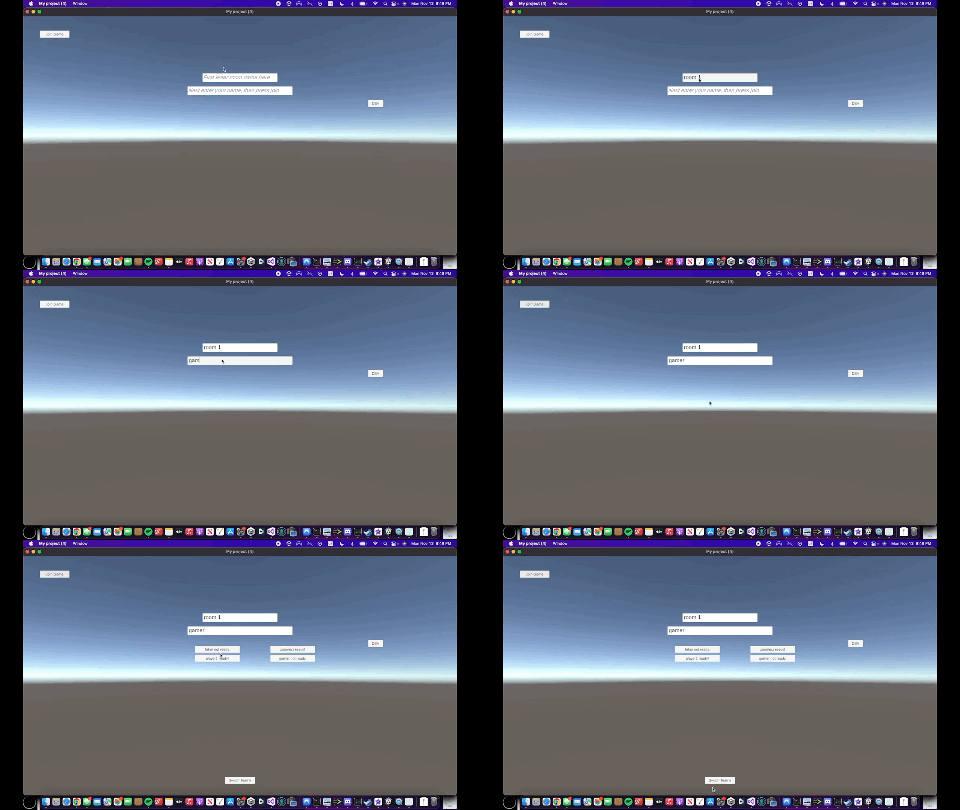
Since TD2 is an online multiplayer game, I had to create a lobby screen where players can assign themselves to a team and a role, and join a lobby with a unique game code.
This clip showcases part of the core game loop in TD2 - microing towers and invading demons. The UI design for this part of the game is heavily drawn from Starcraft 2. On the bottom left, the purple minimap shows where the player's camera is positioned. On the bottom right, there is a list of available commands and spells which the player currently has access to, along with the hotkeys for those commands. This list updates constantly as the player selects new units, or utilizes control groups (which appear in the middle UI panel).
A big initial challenge in TD2 development was creating unit movement which feels natural for players to control. Units need to keep track of other units in their "flock" while avoiding collision with other nearby friendly units. The algorithm I settled on is inspired by the starcraft unit flocking algorithm and Craig Reynold's "Boids" Algorithm.
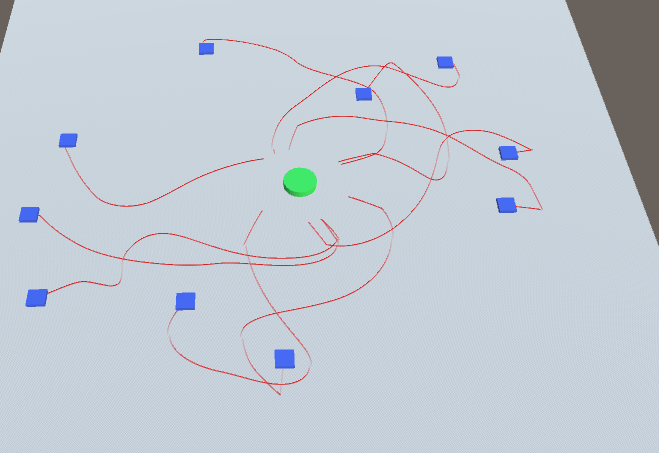
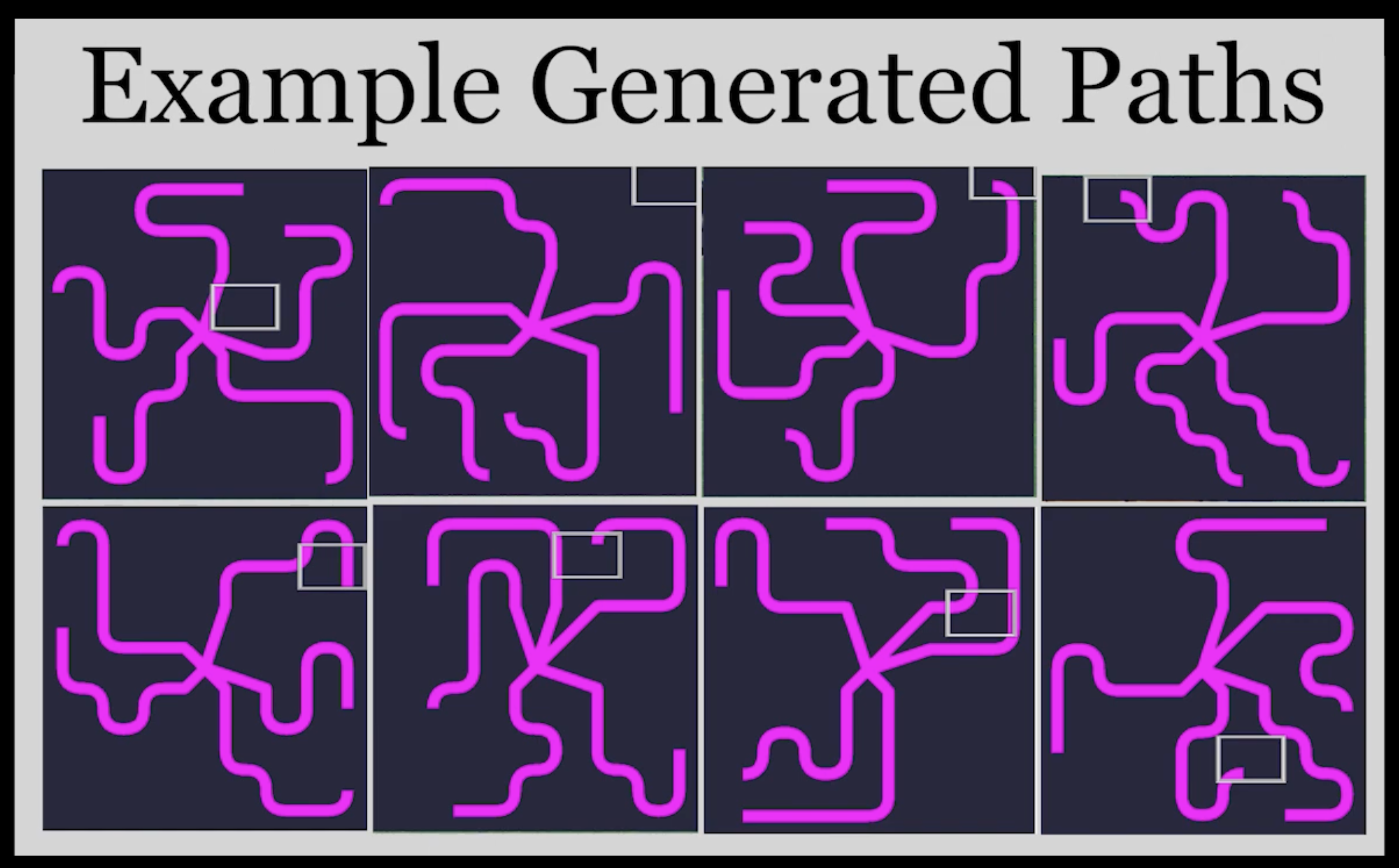
The hardest part of making TD2 so far has been the random generation algorithm for game paths. The map is determined only by a single seed, and multiple players' computers independently generate the same map by syncing the seed across the network. Here are a couple of iterations of the path generation algorithm:

using perlin noise to determine position
using perlin noise for acceleration and velocity
using random tiling with bezier curves

Trail Of Light

Original Film Score Mockup
Spring 2024
Visuals produced by the Berlin International Film Scoring Competition. Composition was my final project for Music 112 at Stanford.

Jazzcore

Electronic Jazz EP
Summer 2023
Composed, produced and performed with support from Stanford's Chappell Lougee grant for undergrad arts projects.
Check out the track below, or find the full album here (Spotify | Apple Music | Youtube).

Realtime Unity Shaders

CS248a Final Project
Winter 2024
Implemented graphics programming concepts in an industry-standard environment.
Learned basics of vertex and fragment shader code using HLSL, working toward a visually cohesive toon shader effect.
Dove deeper with a dynamic tesselation shader adjusting mesh detail based on distance from the camera.

Large Language Model Augmentation

CS224n Final Project
Spring 2024
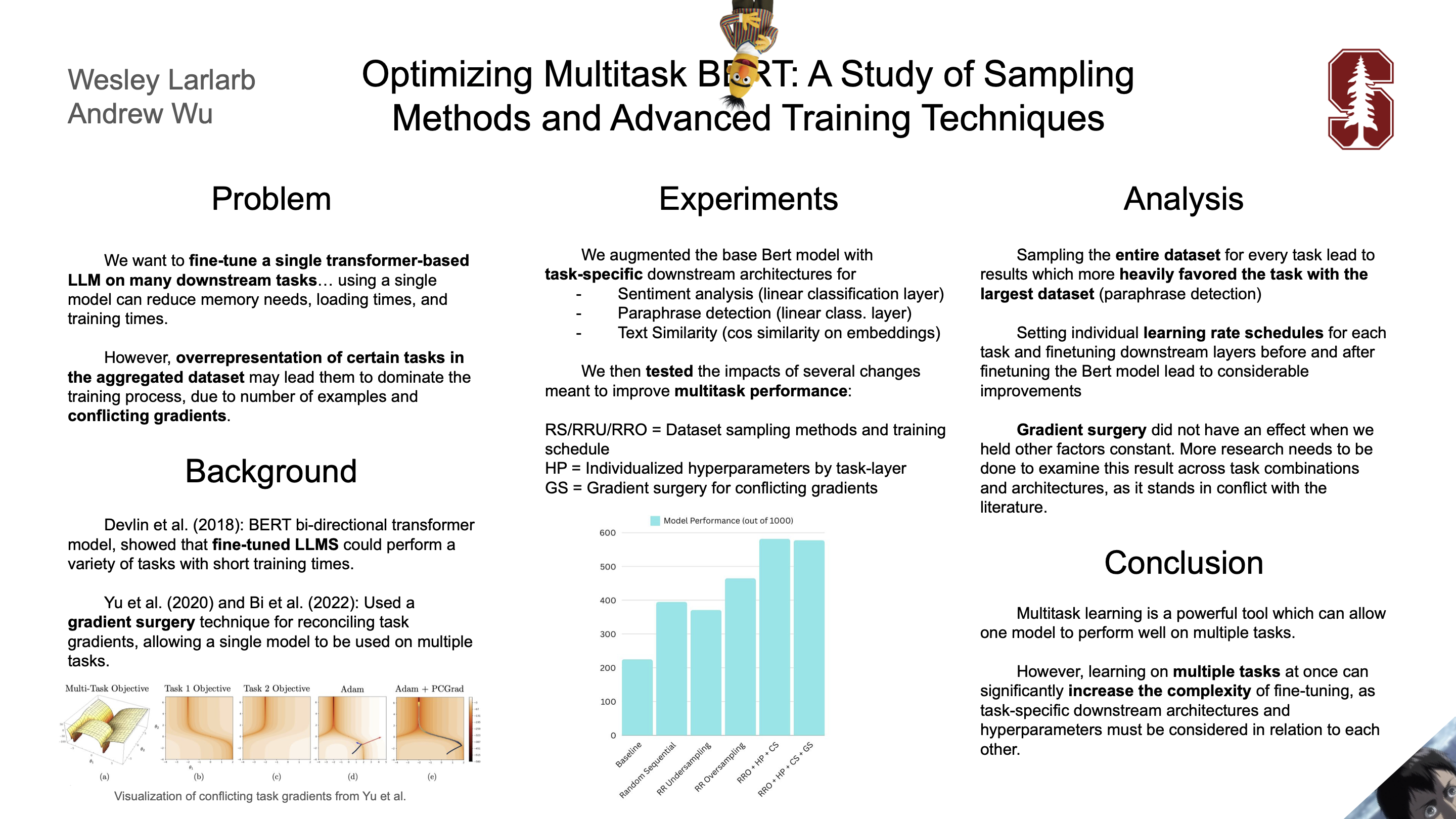
Implemented attention layers, baseline transformer architecture as per the famous BERT paper.
Added task-specific downstream architectures for sentiment analysis, paraphrase detection, textual similarity.
Learned about the impacts of learning rate schedules, balancing dataset sizes, and the problem of conflicting gradients between tasks.

Let's make something

wlarlarb@stanford.edu
415-307-5770